

Dollar General Corp
NYSE:DG



Decide at what price you'd be comfortable buying and we'll help you stay ready.

|
Johnson & Johnson
NYSE:JNJ
|
US |

|
Berkshire Hathaway Inc
NYSE:BRK.A
|
US |

|
Bank of America Corp
NYSE:BAC
|
US |

|
Mastercard Inc
NYSE:MA
|
US |

|
UnitedHealth Group Inc
NYSE:UNH
|
US |

|
Exxon Mobil Corp
NYSE:XOM
|
US |

|
Pfizer Inc
NYSE:PFE
|
US |

|
Nike Inc
NYSE:NKE
|
US |

|
Visa Inc
NYSE:V
|
US |

|
Alibaba Group Holding Ltd
NYSE:BABA
|
CN |

|
JPMorgan Chase & Co
NYSE:JPM
|
US |

|
Coca-Cola Co
NYSE:KO
|
US |

|
Verizon Communications Inc
NYSE:VZ
|
US |

|
Chevron Corp
NYSE:CVX
|
US |

|
Walt Disney Co
NYSE:DIS
|
US |

|
PayPal Holdings Inc
NASDAQ:PYPL
|
US |
EV/EBITDA
Enterprise Value to EBITDA (EV/EBITDA) ratio compares a company`s total enterprise value to its earnings before interest, taxes, depreciation, and amortization. It shows how much investors are paying for each dollar of the company`s earnings, including both equity and debt.
Enterprise Value to EBITDA (EV/EBITDA) ratio compares a company`s total enterprise value to its earnings before interest, taxes, depreciation, and amortization. It shows how much investors are paying for each dollar of the company`s earnings, including both equity and debt.
Valuation Scenarios
If EV/EBITDA returns to its 3-Year Average (9.8), the stock would be worth $128.07 (3% upside from current price).
| Scenario | EV/EBITDA Value | Implied Price | Upside/Downside |
|---|---|---|---|
| Current Multiple | 9.5 | $124.11 |
0%
|
| 3-Year Average | 9.8 | $128.07 |
+3%
|
| 5-Year Average | 11.3 | $147.69 |
+19%
|
| Industry Average | 11.2 | $146.61 |
+18%
|
| Country Average | 14.4 | $188.24 |
+52%
|
Forward EV/EBITDA
Today’s price vs future ebitda
| Today's Enterprise Value | EBITDA | Forward EV/EBITDA | ||
|---|---|---|---|---|
|
$30.9B
|
/ |
Jan 2026
$3.2B
|
= |
|
|
$30.9B
|
/ |
Jan 2027
$3.6B
|
= |
|
|
$30.9B
|
/ |
Jan 2028
$3.8B
|
= |
|
|
$30.9B
|
/ |
Jan 2029
$4.1B
|
= |
|
Forward EV/EBITDA shows whether today’s EV/EBITDA still looks high or low once future ebitda are taken into account.
Peer Comparison
| Market Cap | EV/EBITDA | P/E | ||||
|---|---|---|---|---|---|---|
| US |

|
Dollar General Corp
NYSE:DG
|
27.3B USD | 9.5 | 18.1 | |
| AU |

|
Wesfarmers Ltd
ASX:WES
|
85.1B AUD | 22.5 | 27.4 | |
| US |

|
Target Corp
NYSE:TGT
|
59.8B USD | 8.7 | 16.1 | |
| CA |
|
Dollarama Inc
TSX:DOL
|
47.8B CAD | 22.8 | 35.1 | |
| US |

|
Dollar Tree Inc
NASDAQ:DLTR
|
20.6B USD | 9.6 | 16.1 | |
| JP |

|
Pan Pacific International Holdings Corp
TSE:7532
|
2.8T JPY | 13.4 | 28.1 | |
| JP |

|
Ryohin Keikaku Co Ltd
TSE:7453
|
2T JPY | 13.2 | 24.6 | |
| CA |

|
Canadian Tire Corporation Ltd
TSX:CTC.A
|
10.2B CAD | 7.3 | 19.2 | |
| US |
|
Ollie's Bargain Outlet Holdings Inc
NASDAQ:OLLI
|
5.4B USD | 14.3 | 22.4 | |
| CN |
M
|
MINISO Group Holding Ltd
HKEX:9896
|
38B HKD | 10.7 | 27 | |
| AU |

|
Harvey Norman Holdings Ltd
ASX:HVN
|
5.7B AUD | 8.8 | 10 |
Market Distribution
| Min | 0 |
| 30th Percentile | 10 |
| Median | 14.4 |
| 70th Percentile | 21.5 |
| Max | 1 767 274.1 |
Other Multiples
Dollar General Corp
Glance View
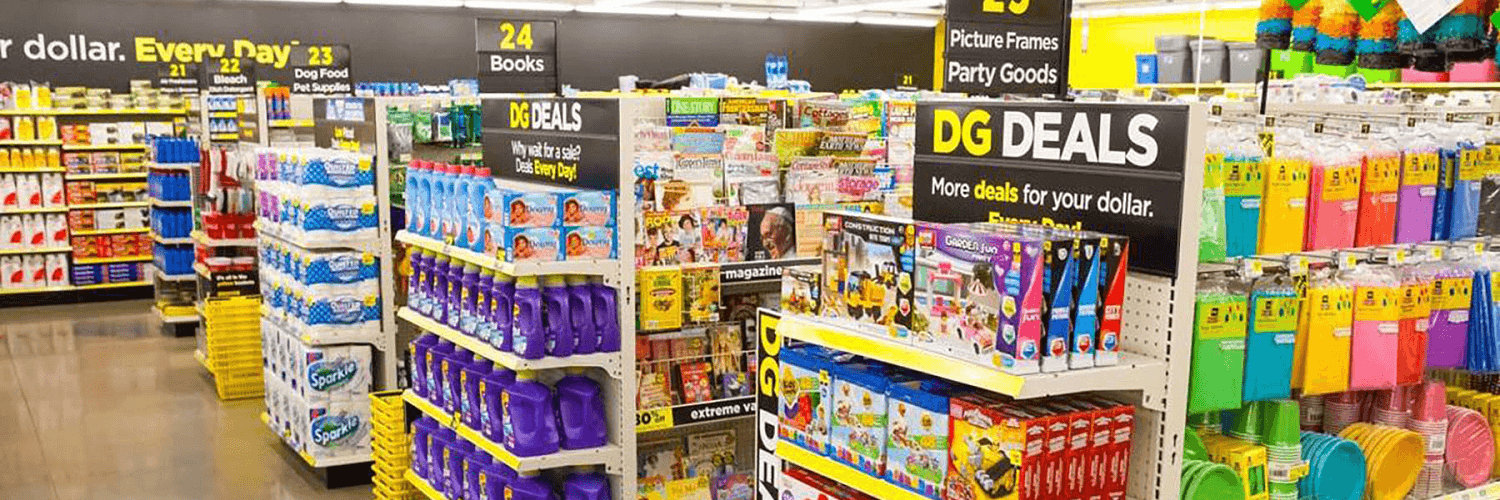
Dollar General Corp. has crafted a significant niche within the vast tapestry of American retail, weaving a narrative of accessibility and convenience. Founded in 1939, the company has flourished by planting its stores strategically in rural and suburban landscapes, often where larger big-box retailers do not tread. This geographic positioning allows Dollar General to offer a breadth of household goods, food products, and apparel to communities seeking affordability without compromising on familiar brands. The model hinges on a lean operational strategy; small-format stores, efficient supply chain practices, and a deep understanding of customer needs have enabled Dollar General to keep costs low. The stores offer a mix of national brands and private label options, ensuring customers have choices that fit their budgets. Monetizing this approach, the company capitalizes on a high-volume, low-margin business model—earning profits through careful inventory management and leveraging economies of scale. Each new store opening feeds into a cycle of growth, further reducing distribution costs and improving product margins. Dollar General’s adept use of data analytics provides insights into shopping trends, steering inventory selections toward what sells best in each location. This nuanced understanding of consumer behavior is instrumental in maximizing sales per square foot, a key metric of success in retail. Dollar General’s story is one of strategic simplicity, offering value to customers while maintaining a tight grip on its operating expenses, thus ensuring steady profitability in an often unpredictable retail environment.
