

International Flavors & Fragrances Inc
XMUN:IFF



Decide at what price you'd be comfortable buying and we'll help you stay ready.
|
I
|
International Flavors & Fragrances Inc
XMUN:IFF
|
US |
|
F
|
Fluor Corp
F:FLU
|
US |
|
M
|
McKesson Corp
F:MCK
|
US |

|
DaVita Inc
NYSE:DVA
|
US |
|
F
|
Fanuc Corp
F:FUC
|
JP |
|
T
|
Tokyo Electron Ltd
XMUN:TKY
|
JP |
|
H
|
Hapag Lloyd AG
SWB:HLAG
|
DE |
|
Flowserve Corp
NYSE:FLS
|
US |
|
D
|
Dunelm Group PLC
OTC:DNLMY
|
UK |

|
Crystal Clear Electronic Material Co Ltd
SZSE:300655
|
CN |
|
C
|
Commerzbank AG
SWB:CBK
|
DE |
|
S
|
Siam Wellness Group PCL
SET:SPA
|
TH |
|
G
|
Guangdong Hotata Technology Group Co Ltd
SSE:603848
|
CN |
|
I
|
IPD Group Ltd
ASX:IPG
|
AU |
|
C
|
Chesnara PLC
LSE:CSN
|
UK |
|
A
|
Anheuser-Busch Inbev SA
XHAN:1NBA
|
BE |
|
CDW Corp
NASDAQ:CDW
|
US |
|
E
|
Edgewell Personal Care Co
XMUN:EGZ
|
US |
|
S
|
Spotify Technology SA
SWB:639
|
LU |
|
U
|
Ulta Beauty Inc
F:34U
|
US |
|
E
|
East Japan Railway Co
F:EJR
|
JP |

|
Orchid Island Capital Inc
NYSE:ORC
|
US |
|
F
|
Future PLC
OTC:FRNWF
|
UK |
|
B
|
Bridgestone Corp
OTC:BRDCF
|
JP |
International Flavors & Fragrances Inc
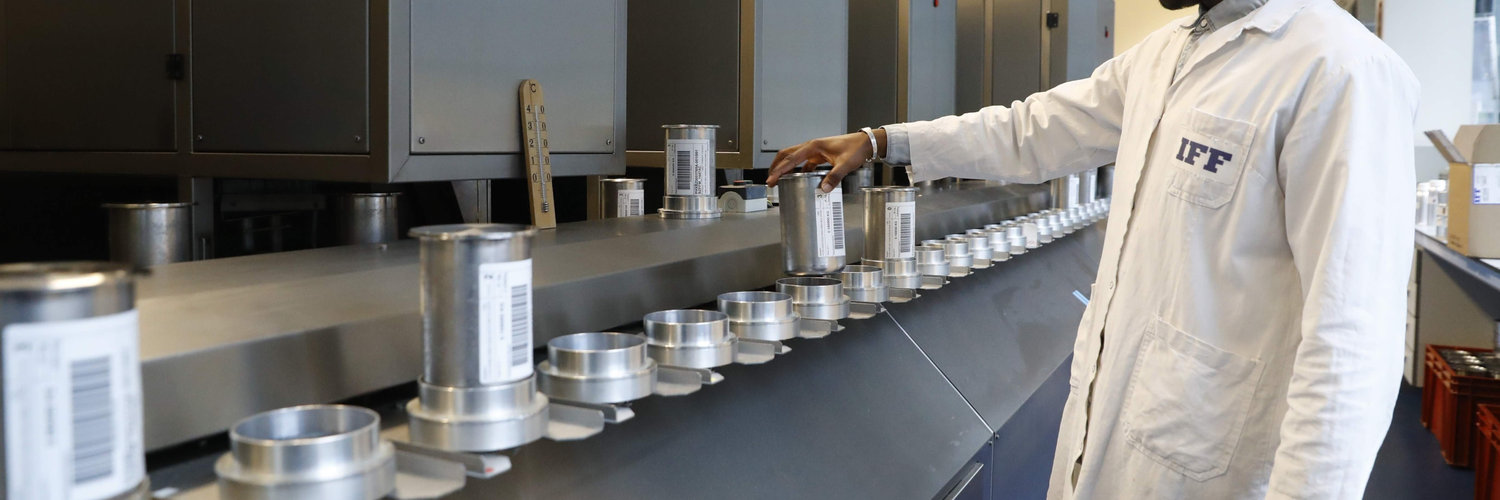
International Flavors & Fragrances makes the scent and taste ingredients that go inside other companies’ products. It sells flavor systems for foods and drinks, fragrance compounds for perfumes, personal care, and household products, and specialty ingredients used in health, wellness, and industrial applications. Its customers are mainly consumer packaged goods companies, food and beverage makers, personal care brands, and manufacturers that need a specific ingredient profile or sensory effect. IFF makes money by selling these ingredients and by designing custom formulas for customers. In many cases, it works closely with a customer to match a taste, smell, texture, or performance target, then supplies that formula over time as part of the customer’s production chain. This means the business is less about selling to end consumers and more about being a behind-the-scenes supplier that helps big brands create finished products. What makes IFF different is that its products are often built into a customer’s recipe or manufacturing process, which can make them hard to replace. The company’s role sits in the middle of the value chain: it combines chemistry, application know-how, and manufacturing to turn raw materials into specialized ingredients that other companies use in their own branded goods.

International Flavors & Fragrances makes the scent and taste ingredients that go inside other companies’ products. It sells flavor systems for foods and drinks, fragrance compounds for perfumes, personal care, and household products, and specialty ingredients used in health, wellness, and industrial applications. Its customers are mainly consumer packaged goods companies, food and beverage makers, personal care brands, and manufacturers that need a specific ingredient profile or sensory effect.
IFF makes money by selling these ingredients and by designing custom formulas for customers. In many cases, it works closely with a customer to match a taste, smell, texture, or performance target, then supplies that formula over time as part of the customer’s production chain. This means the business is less about selling to end consumers and more about being a behind-the-scenes supplier that helps big brands create finished products.
What makes IFF different is that its products are often built into a customer’s recipe or manufacturing process, which can make them hard to replace. The company’s role sits in the middle of the value chain: it combines chemistry, application know-how, and manufacturing to turn raw materials into specialized ingredients that other companies use in their own branded goods.
Results: IFF reported a solid second quarter, with continuing operations revenue of just under $2 billion, up roughly 6%, and EBITDA of $408 million, up 6%. Growth was volume-led across all three core businesses.
Guidance: The company raised its full-year 2026 outlook on a continuing operations basis, now expecting sales of $7.4 billion to $7.6 billion and EBITDA of $1.53 billion to approximately $1.6 billion.
Portfolio shift: Management framed the Food Ingredients divestiture as a major step toward a simpler, higher-growth portfolio focused on Taste, Scent, and Health & Biosciences, with no significant divestitures left to do.
Capital returns: IFF plans to use more than $1 billion of proceeds to reduce debt and has authorized a $2.5 billion share repurchase program, including about $500 million expected in the second half of 2026.
Margins and cash: Stranded costs of about $100 million will temporarily pressure margins, but management expects to remove about 2/3 of those costs within 12 months after close. First-half free cash flow rose to $378 million, up $284 million year over year.
Macro backdrop: Management said consumer demand has remained resilient, but it is still watching Middle East volatility and modest input cost inflation, especially in energy and logistics.