
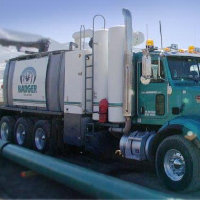
Badger Infrastructure Solutions Ltd
TSX:BDGI
Badger Infrastructure Solutions Ltd
TSX:BDGI
Price:
63.99
CAD
-0.26%
Market Closed
Market Cap:
CA$2.2B



Add Note
Add Target
Capture your thoughts and set a target
Decide at what price you'd be comfortable buying and we'll help you stay ready.
Based on
Margin of Safety
0%
10%
20%
30%
40%
50%
Your Price Target
Linked to
current price
· In Buy Zone
Loading
Note attached
Choose the stock you wish to monitor with a price target
Popular Picks

|
Johnson & Johnson
NYSE:JNJ
|
US |

|
Berkshire Hathaway Inc
NYSE:BRK.A
|
US |

|
Bank of America Corp
NYSE:BAC
|
US |

|
Mastercard Inc
NYSE:MA
|
US |

|
UnitedHealth Group Inc
NYSE:UNH
|
US |

|
Exxon Mobil Corp
NYSE:XOM
|
US |

|
Pfizer Inc
NYSE:PFE
|
US |

|
Nike Inc
NYSE:NKE
|
US |

|
Visa Inc
NYSE:V
|
US |

|
Alibaba Group Holding Ltd
NYSE:BABA
|
CN |

|
JPMorgan Chase & Co
NYSE:JPM
|
US |

|
Coca-Cola Co
NYSE:KO
|
US |

|
Verizon Communications Inc
NYSE:VZ
|
US |

|
Chevron Corp
NYSE:CVX
|
US |

|
Walt Disney Co
NYSE:DIS
|
US |

|
PayPal Holdings Inc
NASDAQ:PYPL
|
US |

Good morning, ladies and gentlemen, and welcome to the Badger Daylighting 2018 Third Quarter Results Conference Call. [Operator Instructions] As a reminder, this conference call is being recorded.I would now like to turn the conference over to your host, Mr. Paul Vanderberg. Please go ahead.
Thanks, Charlie, and good morning, everyone. We thank you for joining our Q3 investor call this morning. With me today is Jerry Schiefelbein and John Kelly, our CFO and COO. Our Q3 earnings and disclosure documents were released last night, and they're the Investor section of our website and also out on SEDAR.We are required to note before we start that some of the statements made on today's call may contain forward-looking information. In fact, all statements made today, which are not statements of historical fact are considered to be forward-looking statements. We make these forward-looking statements based on certain assumptions that we consider to be reasonable. However, forward-looking statements are always subject to certain risks and uncertainties, and undue reliance should not be placed upon them as actual results may differ materially from those expressed or implied.For more information about material assumptions, risks and uncertainties that may be relevant to such forward-looking statements, please refer to our 2018 Q3 MD&A and Badger's 2017 annual information form. Further, such statements speak only as of today's date, and Badger does not undertake to update any such forward-looking statements.So that's enough of that. I'm really looking forward to jumping right into the quarter, so let's go. We are very pleased with our third quarter 2018 performance. The strong year-over-year quarterly revenue growth and, particularly, the great improvements in margin are very gratifying, it's been a lot of hard work. Our Q3 revenue and our adjusted EBITDA are both records.Consolidated Q3 2018 revenue was $168.7 million, up 20% from the previous year's quarter. Q3 revenue was 24% higher in our U.S. operations in U.S. dollars, while revenue in Canada was consistent with last year. For the quarter, the U.S. operations are now contributing 77% of our total revenue versus 23% from Canada. This ongoing U.S. market growth has really been instrumental in transforming Badger into a U.S. infrastructure operation.Our Q3 adjusted EBITDA was $50.9 million, up 31% from the prior-year quarter, and that's on 20% revenue growth. We are particularly pleased with the 240 basis point improvement in gross profit margin in the quarter. Our operators' continued focus on actively managing our costs, in particular, direct labor, the impact of strategic pricing initiatives and continued volume growth drove margin improvement in the quarter. The improvements in gross profit margin, combined with lower G&A expenses as a percentage of revenue, translated into a 260 basis point or 9% increase in our adjusted EBITDA margin compared to prior year. EBITDA margin for the quarter was 30.2%, we're very pleased with that progress. The improvement in margins is a testament to the discipline of our operations team in managing costs combined with the implementation of business improvement initiatives across various parts of the operation.Net earnings for the third quarter of $25.7 million increased $9.5 million or 59% from the prior-year quarter, the primary driver being higher gross profit, as I mentioned a minute ago.The operations team continues to successfully manage growth and fleet utilization. Our Q3 revenue per truck per month was $35,500, up 4% from our RPT of $34,125 last year.During the quarter, we added 17 net hydrovacs to the fleet, building 51 units and retiring 34, and we operated 1,207 units at quarter end.Now that I've touched on the financials, I'd like to add some color on general activity levels. Throughout the third quarter, we continued to see revenue growth across our broad range of geographies and end-use market segments and expect this to continue into the fourth quarter of 2018 on a Q4 year-over-year basis.With the normal seasonal slowdown of construction activity that we've traditionally seen in our northern markets, we do anticipate moderation in activity during Q4 versus Q3, but keep in mind that Q3 is typically our largest seasonal revenue quarter.Taking seasonality out of the equation, we continue to anticipate solid activity levels across the majority of our markets, with our pricing initiatives driving modestly higher rates. This was reflected in our Q3 margin results, and our revenue growth also drove margin based on a combination of volume levels and also in pricing, as I mentioned.The Q3 year-over-year growth in our U.S. operations was particularly welcome given how strong our Q3 was last year, so we had a really tough comp.Improved activity levels were also supported by ongoing adoption of hydrovac technology and general market demand driven by economic activity, especially in the U.S. and also by year-on-year improvement in the oil and gas market in the U.S.As those of us on the call are painfully aware that Canadian oil and gas market has been slow, and we expect this to be the case in the near term. We continue, though, to see opportunities in the infrastructure side of the Canadian oil and gas market, but we expect things to be soft on the production side for some time.The flip side, though, is that our excellent U.S. growth has enabled Badger to successfully reposition our geographic and end-use markets, and because of this growth, the Western Canada oil and gas market is a much smaller part of our business mix than it was just a few years ago.In light of the significant growth opportunities we see across the majority of our operations, we continue to focus on recruiting and training operators. The strong U.S. economy provides great macroeconomic fundamentals, but it also has created challenges related to sourcing labor. We could have realized more than the top line 20% revenue growth in Q3 versus last year if we could have found and trained all the operators we needed. But the real positive here is that the market opportunity for Badger growth is there. The opportunity is there, and we're focused on executing on it. We have a strong focus on recruitment and retention of hydrovac operators. This is a key initiative for us. We'll be speaking to this in more detail later this week at our annual Investor Day.In addition to the general positive momentum across the business, we expect a modest tailwind for the first part of Q4 2018 related to work associated with Hurricane Michael and maintenance work associated with the natural gas distribution network in the Northeast. The Hurricane Michael repair work is really an unbelievable story of Badger customer service, which is what we're all about. The operations team really pulled out all the stops and sourced over 100 Badgers and 250 operators and support staff on behalf of our customers' hurricane repair work.The scale of this project, the timing of the tremendous response from Badger all for our customers was really unprecedented for the hydrovac industry. We basically sourced more hydrovacs for this project than all the 2 of our largest competitors have in total in their fleet. This ability to service our customers reinforces the value that our operating scale and our extensive branch network provides, but this service is only driven successfully by our local and regional leaders. They coordinated closely with our customers, and our people in the Southeast on hurricane support reached out across all of our regions to support this tremendous effort.I'd like next to comment on introduction of guidance, along with our Q3 results. We continue to see positive momentum in the business and are encouraged by our revenue run rate as we exited Q3. Badger expects the momentum realized in Q3 to continue into Q4 and into next year. The business trends and growth we continue to see have provided us with the confidence to provide a more detailed financial outlook. As we have over the past several years, we continue to look for ways to improve our disclosure, improve our investor communications, and we believe providing guidance is another logical step in this process.With our Q3 release, we've included an outlook for adjusted EBITDA for 2018 in the range of $140 million to $160 million, and for 2019 of $170 million to $190 million. There's no change to our 2018 hydrovac build range or retirements from what we communicated last quarter. We anticipate being at the high end of our 160 to 200 build range for 2018. Hydrovac retirements continue to be expected to be between 60 and 80 units for this year.For 2019, the anticipated hydrovac build rate is 190 to 220 units, with retirements between 40 to 60 units. I would like to note that during the third quarter, we retired 34 units. Retirement timing is always based on specific timing of removing a unit from the fleet, and retirements are a truck-by-truck decision. Accordingly, this level of retirement should not be extrapolated into future quarters. We expect to end up 2018 within the stated range of 60 to 80 units.Now a comment on our Common Business Platform project. As we disclosed last quarter, Badger launched the process to standardize business processes and modernize our legacy IT systems into a single ERP system. We refer to this collectively as the Common Business Platform project. Efforts related to this project in the third quarter were focused on redesigning processes and initial systems configuration. This project is on schedule and on budget.Regarding the balance sheet. Badger's balance sheet continues to be strong, providing the necessary financial flexibility to support our growth opportunities and also strategically manage our overall capital allocation. As of September 30, 2018, total debt less cash was $73.4 million or 0.5x trailing 12 months compliance EBITDA. Related to the balance sheet, we did not purchase any shares under the NCIB during Q3.Now before we move on to the Q&A, I'd like to spend a minute to review the great progress we've made toward our strategic milestones. To review our strategic milestones are the follow: number one, to double the U.S. business from fiscal 2016 levels over the succeeding 3 to 5 years. Our 2018 year-to-date growth in U.S. revenues has been 28%, on top of a 32% increase last year. This is an excellent progress on achieving this milestone, and we're over 70% of the way to doubling the U.S. business from the starting point at the end of '16, and in just the second year, we're at 70% in this 3- to 5-year target. The second milestone is to grow adjusted EBITDA by a minimum of 15% per year. Our growth in adjusted EBITDA last year was 20%, and we've experienced further growth and even a higher growth rate of 25% so far this year. Again, we're making excellent progress in achieving this milestone. Our third milestone is targeting adjusted EBITDA margin in the 28% to 29% range. We are very pleased with our 2018 progress on this milestone and, in particular, with our 2018 Q3 margins. Our year-to-date margins reflect the impact of our strong U.S. growth, our operating cost management and our business improvement initiatives, with our 2018 adjusted EBITDA margin up 120 basis points year-to-date or 5% from last year.Our fourth key milestone is to drive fleet utilization and revenue per truck per month to above the 30% level. Progress continues to be excellent here, too, with our last year 2017 RPT of $30,075, and with our 2018 RPT tracking very well to the $30,000 target. As you know, utilization is key to our operating cost management, our ability to drive pricing and to managing overall growth, and these positive trends are occurring across all 3 areas in our business.So we're very pleased with Q3, and we're very much looking forward to discussing all of this more with you coming Thursday, November 15, at our second annual Investor Day, which is being held at the King Eddy Hotel in Toronto. The presentation is scheduled to begin at 9:00 a.m. We'll be there earlier for that -- for coffee and conversation, and we expect to be finished by noon. Details to confirm your attendance are on our Q3 earnings release as well as the Investor Relations segment of our website.For me, this is really an opportunity to meet the Badger team and the folks who are delivering this great -- these great results and are working hard to further improve your company's performance.So with that summary, we'd now like to turn the call over to the moderator for questions. Back to you, Charlie.
[Operator Instructions] Our first question comes from the line of Yuri Lynk from Canaccord Genuity.
Paul, you mentioned labor -- tight labor markets, that's not a surprise, I guess, given the headline stats that are out there. But how constrained was labor in the quarter? And any regions, in particular, where you're seeing that? And I guess, thirdly, how big -- would that be the biggest risk to not achieving guidance or maybe achieving the lower end of guidance next year would be if you just couldn't find the people to put in the trucks?
Yes. That's a great question, Yuri. Regarding regionality, we see -- have seen the labor market tightened across the U.S. and certain pockets in Canada. In the U.S., it's been the tightest in our oil and gas markets, our traditional Southwest oil and gas markets. And there is a range of tightness in different markets, okay, and we're managing through that. We can talk about shortage of operators, but we still drove 20% growth, and a lot of that's driven by volume. So we have been very, very successful in managing our way through that thus far. I think we talked on this a little bit last quarter, but we have some really exciting initiatives underway on the recruiting side with third-party recruiting resources that we're adding to the mix to really pick up our game to the next level on overall recruiting. And as you know, that's the beginning of the operator funnel in sourcing operators. So a lot of initiatives going on there. We're pretty excited about it. We just got started in August with the new third-party recruiting partner, and the initial results are very, very positive. So it's early days, but we're very pleased on what we're seeing there. And going into next year, we expect to gain more and more momentum on our recruiting operations and our efforts. And as Tracey and the HR team get a head of steam going, we're pretty optimistic about what we see coming. We know we're competing with other companies out there, but these initiatives are things that we are doing and just getting started, and we're expecting to see the benefits from that. So we'll -- actually, Tracey would be talking in more detail specifically on this issue Thursday at Investor Day.
Okay. And can you give us an update on how turnover is progressing?
Yes. No, we continue to grind away at that. As we talked about last year at Investor Day, we made modest improvement in '17 over '16, and those are the trends that we're seeing in '18 over '17, modest improvement on operator retention and modest improvement on manager retention. So this is something, as you know, you don't wave a magic wand over. These are something you grind away at and you work a lot of small initiatives to make a big difference over time. So we're very pleased with continued progress, and this is going to be a continued strategic focus for us as we go forward.
Okay. And then, Paul, just on the guidance. I mean, welcome to see '19 guidance out at this point in the calendar. Notoriously, a short visibility business, hydrovac. Just wondering if you could put a little more meat on the bone in terms of what's giving you the confidence, the ability to feel that you've got enough visibility to put out numbers for next year.
Yes. Well, the main thing is we've seen the trends in the business this year, Yuri, and we're seeing higher levels of activity versus last year, and also, we're seeing more and more bids and quotes out into the future and into next year. And it looks like, especially in the U.S., we're in for a pretty decent run here for a couple of years. That's one part of it. So that's the background between the confidence piece. And then the other piece of introducing guidance is pretty simple. Over the last several years, we've undertaken a number of initiatives, and we've considered alternatives to improve our investor communications and our disclosure. And we view introducing guidance as just one more step of improving ongoing investor communications. And it's something we think is more mainstream for public companies these days, and it's time for Badger to do it. So we're introducing it and -- but we're introducing it with a lot of confidence. And as you say, we don't have a view of multiyear contracts in the sales funnel, but the level of activity, the customer inquiries and what we're hearing from our regional and local managers gives us the confidence to view into 2019.
Our next question comes from the line of Brian Pow from Acumen Capital.
So a couple of questions. Just looking at the 2019 build rate. I know last year, you didn't give the build rate until into Q1 kind of thing, and it sounded like you sort of started slow and then ramped up into it. How should we think of your 2019 build rate? Is it pretty well straight line? Or should we expect it to slow down a bit this winter and then pick up again?
Yes. Well, there's always a seasonal change in the number of trucks that John and the operational team need. And the build rate last -- next year versus this year is really driven top-down by the level of activity we see. If we're at the higher end of the range, it will be a new record for Badger, even more than the oil and gas boom. So that's pretty exciting. We are set up to be able to handle that at the plant. We're very confident of that. And the other part of the build rate we're looking at is the success we've had in placing units this year, so we're not going to end up with a large number of Badgers on the fence already built as we exit this year. So we've managed that very well. And so we're not going to have in the inventory -- a large inventory of Badgers going into next year, which really allows us to run the plant in a more stable, consistent manner as we get into next year. So that's the same pattern we expect to see, and we're very well positioned for the build going into 2019.
Okay. And then, I appreciate the guidance in that for next year. One of the things that you noted in your MD&A is that you're going to be changing how your revenue per truck calculation is presented and as well as just some of the revenue groupings. Can you speak to that a bit?
Yes. I'll speak to it a little bit, but I would strongly encourage everyone to participate in our Investor Day. Jerry is going to be going through specific detail on the revenue segmentation and the grouping of revenue segmentation and how that relates to changing RPT. And our intention is to be able to have an RPT calculation that can be derived from our disclosure and that's something that anyone can calculate. So that's something that -- that's another one of these areas where we've gotten input from our investors and from the analyst community on improving our disclosure and our investor communications. So that's another one we've taken to heart, and Jerry will be providing good detail on that on Thursday.
Okay. Will it be granular enough that you can differentiate Canada and the U.S.? Or what are the thoughts there?
That's correct.
Okay, great. And then, you mentioned in a previous question about sort of bids and quotes, which is something we really haven't sort of heard from you before. So can you just help us understand that a little bit more, what your clients were asking of you in this day and age with the bids and quotes?
Yes. Well, the bidding and quoting activity is not changing much. What's changing, which is enhancing our visibility, is that we have new system of capturing quotes, and we're starting to put processes and procedures in place to have a centralized quote tracking and accumulation of centralized quoting. It's a very exciting new initiative. And it's one of these benefits that we see coming out of the value stream mapping and the blueprinting in our common business process work. So we're starting to see some benefits there. Are we going to have a view by quarter of exactly what's there? We never will have something exact good in the hydrovac business, as you all know, but we're starting to get some better tracking. And its early days, but the benefits are already starting to accrue. So this is just a reflection of the progress we're making with internal operational improvements, driven by our common business process and common business program project.
[Operator Instructions] Our next question comes from the line of Jonathan Lamers from BMO Capital Markets.
Just picking up on the discussion about the 2019 guidance and the quoting. Could you remind us of the range of periods that your bids and quotes would be for? I know the shortest would be for today, but how far out would these extend?
Yes. We would have bids from, as you say, this afternoon or maybe for an hour from now, all the way out to something that might run a year.
And now that you've expanded the business development function, do you have more bids and quotes from the national customers that would look to sign MSAs with you that might give you a bit more visibility? Or is the mix of activities still kind of the same, that there's still between the regionals and the nationals?
Yes. Well, we would certainly have a mix of activity. Tim has established a very strong business development team, and part of that is a strategic accounts function, which was introduced in 2017, and he'll talk a little bit more about that on Thursday also. But our identified strategic accounts in Tim's new -- this is Tim Reiber's new organization, accounts for over -- just over 33%, well over 1/3 of our total volume. And -- so as we begin to gather that together and manage those relationships, it gives us some better visibility. But it's important to remind everyone that even though we have MSAs in place, these are not what you'd call take-or-pay contracts. So you'd have an MSA in place on a spread of pipeline, for example, but there's no guarantee that so many hydrovac hours are going to be utilized and the timing of that. So it really is incumbent on us to be very responsive to day-to-day peaks and valleys in demand based on the stage that the project is in. So we're not -- our business model isn't really structured to that point. But our business model is very successful because with our network and our scale, we can always come up with a Badger when a customer needs it, and that way, we can really perform under those MSAs.
And on the 20 -- on the fixed cost investment, it seems to have flattened out a bit in recent quarters. As you're looking to 2019, do you plan to grow your fixed costs and your SG&A kind of in line with revenue? Can you speak to that a little bit?
Yes. Yes, we expect our G&A as a percent of revenues to even trend a little bit higher in 2019, and we just recently looked at our budgets. And the major reason for that is with the common business process that we're going through, and we're going to be running dual systems for a period of time, and the first stage where we're really going to be up and running dual systems is going to be calendar year 2019. So we're not expecting to have a decline in SG&A as a percentage of revenues even with expected good growth for next year because of running dual systems. And the good thing about dual systems in the process is as we get integrated, we'll be dropping off of our legacy systems and the run rate will trend down over time. And our long-term trend in our budgeting and in our 5-year plan gets us down to our target of the 4%, which is our stated target for SG&A as a percentage of revenues.
Okay. And not to nitpick, but I think we all have a good handle on the expected cost from the ERP system. If we were to look through -- if we were to treat those costs as discrete from your SG&A, would the remaining SG&A be growing more in line with revenue?
It would actually be either in line with revenue or declining as a percentage of revenue based on growth.
And just on the remaining standardization initiatives, there is quite an improvement in gross margin this quarter, which to my understanding is it's mostly from operating leverage benefits and some benefits from the surcharges implemented. Did -- was there any benefit from the standardization initiatives? And now that you're a little further along, do you have any visibility as to when some of those might start to benefit margins going forward?
Yes. Well, there's a number of standardization initiatives that John and the operations team aren't waiting to implement. They're not waiting for the new system to be in place to implement. And as I mentioned a minute ago, the value stream mapping exercises and blueprinting we've gone through has really identified a menu of improvement opportunities, and we're prioritizing those and going after them. You talked about surcharges, and there's a general pricing opportunity that's out there. We've seen some of that reflected in Q3. It's pretty exciting. And just to provide some color, those programs are really a result of our standardization, and we've rolled those programs out across the organization with the tracking mechanisms, with the information on utilization and adoption of some of those new programs and also with the tools for our local managers to measure success and to highlight the opportunity and the benefit for their own branch P&L. So these things are really being driven by doing things in a more standardized, consistent manner across the organization. I talked about capturing quotes that we've never done before. That's another standardization initiative. So you'll be hearing a lot more about standardization. And as we go forward, it's really early days, but we're really excited about the opportunities that we're seeing and the fact that it's already hitting the bottom line. John and the ops team will be talking more about that, and John uses a term called operational excellence, that's our internal term, for driving these internal business improvements, but he'll be talking more about that on Thursday. It's an exciting time, and -- but standardization with an organization like ours, where we're really leveraging our scale and making the most of it is an exciting improvement opportunity.
[Operator Instructions] Our next question comes from the line of Jeff Fetterly from Peters & Co.
Just a few random questions. On the new build side, the 190 to 220 next year, what level of cost inflation have you seen so far? And do you expect or have you built into your estimates for next year?
We think our cost inflation will be single digits.
Okay. And that's using 2018 as the base?
That's correct.
Okay. In terms of retirement, the year-over-year decline in retirement for '19, do you expect or are you planning on refurbishing any incremental or a higher volume of units next year? Or is that just a function of the age and timing of the fleet?
Yes. It's not really -- the number in the guidance is really not reflected by any particular change in retirement versus refurbishing strategy, although we are looking at that. And that's something that could benefit our overall fleet size and our utilization and our maintenance expense as we go forward. So -- but that's not really reflected in that. It's really reflected in our timing of fleet, maintaining the average age. We don't want to age out the fleet and looking quite frankly at what we added back in 2009, which was a pretty severe recession year. So a lower number of units added 10 years ago is our lower starting point for 2019 10 years down the road.
Okay. And then just last thing. The $2.2 million in terms of bad debt expense that you highlighted in the MD&A. Can you give us some more perspective around that? And I guess, how you avoid similar type of issues going forward?
Yes. Well, with the portfolio as big as ours, there's a large number of projects out there. This one was a one-off customer on one large project. Lot of work happened in a short period of time. And it was the individual financial circumstances of that customer and unique to that customer that drove the bad debt. We're not done with our collection efforts, but we did take the allowance and write it down. So we view it as a one-off. And this is something we are very unhappy about, don't like to see, but it's the random ones that surprise you in a portfolio, not the people that you're always chasing money for, it seems, that go sideways. During 2018, we have -- Jerry has beefed up the credit team. We brought in a Director of Credit, and she is building up the organization and putting standardized processes in place, just like we are across all the rest of the organization, and dramatically improved our quoting. So as we build our systems and procedures, we're going to have a lot better visibility, and especially getting tools to our regional operators so they have better visibility into the portfolio. So I'm very pleased with the progress we've made in the back office, in our support function, in credit and collections and in our contract side of the business over the last 6 months.
Okay. And just lastly, in terms of the guidance, the commentary for RPT to be flat on a year-over-year basis, for gross margins to be flat on a year-over-year basis. The -- do you assume that from an incremental margin standpoint, you're going to see some deterioration in 2019, as you talked earlier about your cost structure continuing to rise? Or how do you think about those inputs in the context of the guidance disclosure you've given?
Yes, but those are fairly general comments on margin. We do think there's incremental room in RPT and utilization. As you can see year-to-date -- sorry, in the quarter, we're up 4% from last year. And when you're in the 35 range, it's hard to squeeze a lot more utilization out of the fleet, but we see the opportunity there. And there's certainly opportunity over the year as seasonality ebbs and flows, so we think there's some opportunity there. And our guidance is our best estimate based on all the information we have. We certainly have business improvement initiatives that we're targeting to go after just like we did in 2018, and we're hoping to do better. As we have more information, we'll provide updates with the guidance as we go along. And this is new for Badger, so we'll work our way through it.
[Operator Instructions]
Charlie, do we have any more?
We have no further questions at this time, sir. Please continue.
Okay. Well, then, on behalf of all of us at Badger, I'd like to say thanks to our shareholders, our customers and our employees. We just concluded a great quarter, but we're very excited about the prospects for the rest of the year and 2019. And we very much appreciate your ongoing support because that's what really drives Badger's success. So thanks for participating in the call today, and Charlie, I'll leave it with you to end the call.
Thanks so much. Ladies and gentlemen, this concludes today's conference. Thank you for your participation. You have a wonderful day. You may disconnect.