
Fortescue Metals Group Ltd
F:FVJ



Decide at what price you'd be comfortable buying and we'll help you stay ready.
|
F
|
Fortescue Metals Group Ltd
F:FVJ
|
AU |

|
Acconeer AB
F:2LU
|
SE |
|
S
|
SAP SE
SWB:SAP
|
DE |
Fortescue Metals Group Ltd
Fortescue Metals Group is an Australian mining company best known for digging up iron ore in Western Australia and shipping it to steelmakers around the world. It owns and runs mines, rail lines, and port facilities that move ore from the Pilbara region to ships bound for Asia and other major steel markets. Its main business is selling iron ore, which is a basic ingredient used to make steel for buildings, cars, machines, and infrastructure. The company makes money by producing iron ore and selling it under long-term and spot sales contracts to steel mills, trading houses, and other industrial buyers. Because it controls much of the supply chain from mine to port, Fortescue can move large volumes of ore efficiently and keep a tight grip on logistics. That makes it more than just a miner: it is also an exporter and bulk freight operator. What sets Fortescue apart is its role as a low-cost, large-scale iron ore supplier with its own transport network in a remote mining region. That infrastructure gives it direct control over getting product to market, which is important in a business where shipping reliability and operating discipline matter as much as mining itself. The company also has growing interests in energy and decarbonization, but iron ore remains the core business that defines how it earns its money.
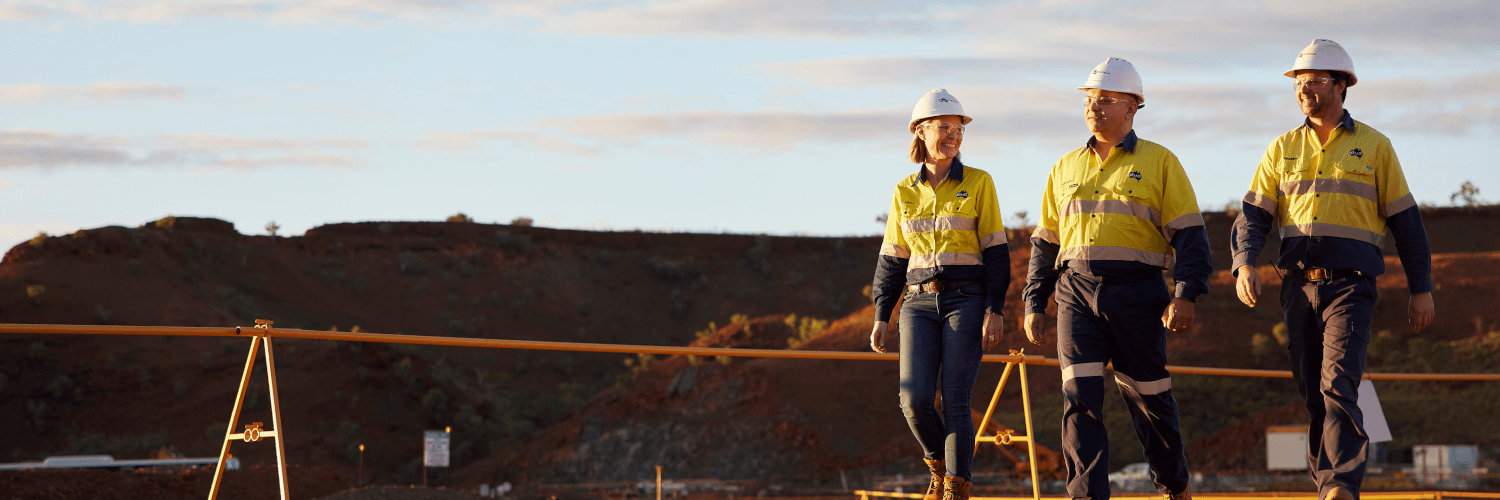
Fortescue Metals Group is an Australian mining company best known for digging up iron ore in Western Australia and shipping it to steelmakers around the world. It owns and runs mines, rail lines, and port facilities that move ore from the Pilbara region to ships bound for Asia and other major steel markets. Its main business is selling iron ore, which is a basic ingredient used to make steel for buildings, cars, machines, and infrastructure.
The company makes money by producing iron ore and selling it under long-term and spot sales contracts to steel mills, trading houses, and other industrial buyers. Because it controls much of the supply chain from mine to port, Fortescue can move large volumes of ore efficiently and keep a tight grip on logistics. That makes it more than just a miner: it is also an exporter and bulk freight operator.
What sets Fortescue apart is its role as a low-cost, large-scale iron ore supplier with its own transport network in a remote mining region. That infrastructure gives it direct control over getting product to market, which is important in a business where shipping reliability and operating discipline matter as much as mining itself. The company also has growing interests in energy and decarbonization, but iron ore remains the core business that defines how it earns its money.
Production: Record first-half shipments of 100.2 million tonnes with strong safety and operating performance.
Costs: Hematite C1 unit cost was $18.64/tonne for the half; full-year C1 guidance $17.50–$18.50/tonne at AUD 0.65.
Profitability: Underlying EBITDA $4.5 billion and NPAT $1.9 billion, driving a 65% payout interim dividend of AUD 0.62/share.
Decarbonisation: $426 million spent in H1 on decarb; FY decarb guidance $900 million–$1.2 billion and fleet electrification underway.
Balance sheet & cash: Cash $4.7 billion, net debt $1 billion, net cash from operations $3.2 billion and free cash flow $1.5 billion.
Growth & projects: Alta Copper acquisition nearing completion; Belinga (Gabon) and other copper/critical minerals exploration being advanced.
Market commentary: Ongoing commercial discussions with Chinese partners; pricing references shifting (62→61 indexes) and customer engagement on lower‑grade product is underway.
