

Fuelcell Energy Inc
NASDAQ:FCEL



Decide at what price you'd be comfortable buying and we'll help you stay ready.

|
Fuelcell Energy Inc
NASDAQ:FCEL
|
US |
|
M
|
MTN Group Ltd
SWB:LL6
|
ZA |

|
Palo Alto Networks Inc
BMV:PANW
|
US |
|
A
|
Aviakompaniya UTair PAO
MOEX:UTAR
|
RU |
|
K
|
Koninklijke Philips NV
XMUN:PHI1
|
NL |

|
Estee Lauder Companies Inc
BMV:EL
|
US |
|
A
|
Atlantia SpA
XHAM:AU9
|
IT |

|
Fast Retailing Co Ltd
TSE:9983
|
JP |
|
B
|
Banca Mediolanum SpA
OTC:BNMDF
|
IT |
Fuelcell Energy Inc
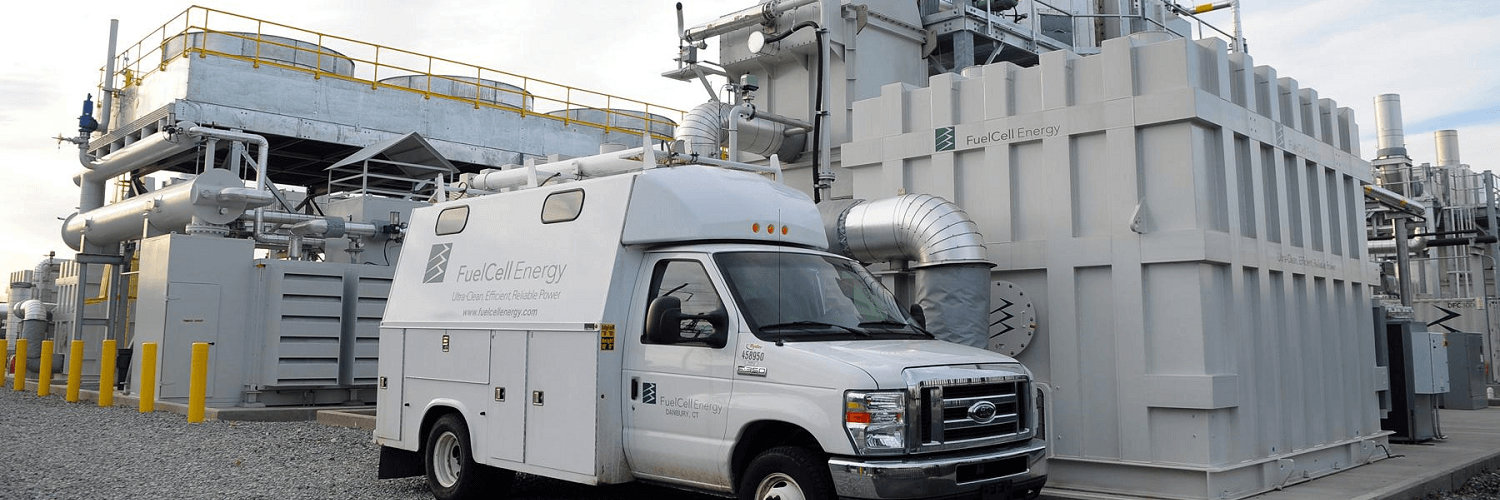
FuelCell Energy makes stationary fuel cell systems that generate electricity and useful heat from natural gas, biogas, or hydrogen-rich fuel. It also works on related projects such as carbon capture and hydrogen production. The company sells fuel cell power plants, engineering and construction services, and long-term operation and maintenance support, so it can earn money both from equipment sales and from ongoing service and power contracts. Its main customers are utilities, industrial sites, wastewater plants, universities, municipalities, and other organizations that need reliable on-site power or want to reduce emissions. FuelCell Energy often sells a complete project rather than just a machine: it designs the system, helps build it, and then may operate or service it over time. That gives it a role in the energy value chain that sits between traditional equipment makers and power plant operators. What makes the business different is that its fuel cells can provide continuous, distributed power with lower local pollution than many combustion-based generators. The company is not a mass consumer hardware seller; it is a niche industrial energy company focused on projects where customers value clean baseload power, grid support, or the ability to use hard-to-handle fuel streams such as biogas.

FuelCell Energy makes stationary fuel cell systems that generate electricity and useful heat from natural gas, biogas, or hydrogen-rich fuel. It also works on related projects such as carbon capture and hydrogen production. The company sells fuel cell power plants, engineering and construction services, and long-term operation and maintenance support, so it can earn money both from equipment sales and from ongoing service and power contracts.
Its main customers are utilities, industrial sites, wastewater plants, universities, municipalities, and other organizations that need reliable on-site power or want to reduce emissions. FuelCell Energy often sells a complete project rather than just a machine: it designs the system, helps build it, and then may operate or service it over time. That gives it a role in the energy value chain that sits between traditional equipment makers and power plant operators.
What makes the business different is that its fuel cells can provide continuous, distributed power with lower local pollution than many combustion-based generators. The company is not a mass consumer hardware seller; it is a niche industrial energy company focused on projects where customers value clean baseload power, grid support, or the ability to use hard-to-handle fuel streams such as biogas.
Revenue: Second-quarter revenue was $35.6 million, down about 5% from $37.4 million a year ago, as lower service and generation revenue more than offset higher product revenue from Korea deliveries.
Losses: Operating loss widened to $77.9 million, largely because of a $42.6 million non-cash impairment tied to the Groton project; adjusted EBITDA improved to negative $17.1 million from negative $19.3 million.
AI Demand: Management said AI and data center demand is driving a sharp increase in interest, with submitted proposals rising to 4 gigawatts, more than 250% above the first quarter.
Capacity Plan: FuelCell is raising its planned Torrington manufacturing capacity expansion to 500 megawatts from 350 megawatts, with total cost expected to be $200 million to $275 million.
Balance Sheet: The company ended the quarter with $440.9 million of cash and cash equivalents and said it remains essentially debt-free, giving it flexibility to fund growth.
Outlook: Management still targets adjusted EBITDA positivity once annualized production reaches at or above 100 megawatts and said it does not expect significant operating expense growth.
Commercial Progress: The new 12.5 megawatt fuel cell block is already helping customer conversations, and management expects more product and service backlog conversion over time.
