

Teck Resources Ltd
F:TEKB



Decide at what price you'd be comfortable buying and we'll help you stay ready.
|
T
|
Teck Resources Ltd
F:TEKB
|
CA |

|
Northrop Grumman Corp
NYSE:NOC
|
US |

|
Ollie's Bargain Outlet Holdings Inc
NASDAQ:OLLI
|
US |
|
P
|
Pearson PLC
F:PESA
|
UK |
|
H
|
HSBC Holdings PLC
OTC:HBCYF
|
UK |
Teck Resources Ltd
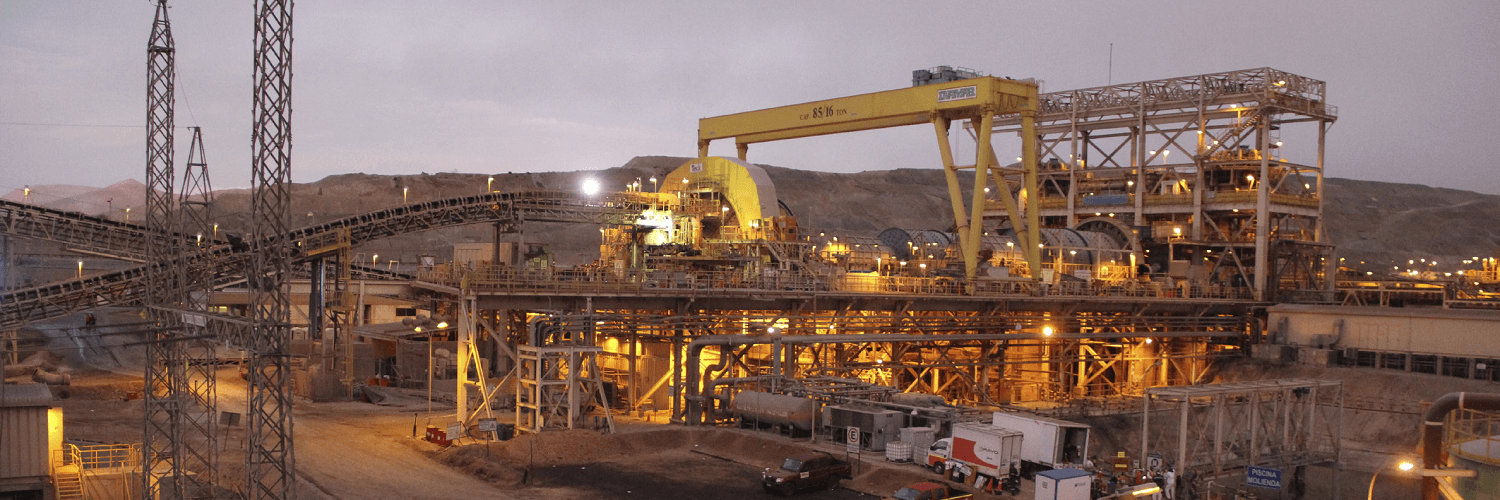
Teck Resources is a mining company that digs up and processes metals and minerals for industrial buyers. Its main products are copper, zinc, and steelmaking coal, which are essential inputs for wiring, construction, machinery, and steel production. The company runs mines and processing facilities in North and South America, turning ore into saleable concentrates and finished mineral products. Teck makes money by selling these commodities to smelters, steel mills, and other large manufacturers under long-term contracts and spot market sales. Its customers use the materials as raw inputs, so Teck sits early in the supply chain rather than selling finished consumer goods. Because its business depends on owned mines and reserves, its value comes from finding, developing, and operating large mineral deposits efficiently. What makes Teck different is that it is a pure resource producer, not a metal trader or processor with broad consumer exposure. Its earnings are tied to global demand for industrial metals and steel inputs, along with the quality, location, and cost of its mining assets. That gives the company a straightforward business model: extract ore, process it, and sell the output into global commodity markets.

Teck Resources is a mining company that digs up and processes metals and minerals for industrial buyers. Its main products are copper, zinc, and steelmaking coal, which are essential inputs for wiring, construction, machinery, and steel production. The company runs mines and processing facilities in North and South America, turning ore into saleable concentrates and finished mineral products.
Teck makes money by selling these commodities to smelters, steel mills, and other large manufacturers under long-term contracts and spot market sales. Its customers use the materials as raw inputs, so Teck sits early in the supply chain rather than selling finished consumer goods. Because its business depends on owned mines and reserves, its value comes from finding, developing, and operating large mineral deposits efficiently.
What makes Teck different is that it is a pure resource producer, not a metal trader or processor with broad consumer exposure. Its earnings are tied to global demand for industrial metals and steel inputs, along with the quality, location, and cost of its mining assets. That gives the company a straightforward business model: extract ore, process it, and sell the output into global commodity markets.
Strong quarter: Teck said Q2 2026 was another strong quarter, with adjusted EBITDA tripling to $2.2 billion and cash flow from operations reaching $1.7 billion, helped by record copper pricing and higher production.
Costs improved: Net cash unit costs fell in both copper and zinc despite higher energy costs, supported by stronger operations and favorable byproduct pricing.
QB progress: QB delivered its third straight quarter of stable operations, had no TMF-related downtime in the past 3 quarters, and management is considering accelerating tailings work with Rock Bench 6.
Merger on track: Teck said the Anglo American merger remains on track, with China’s SAMR review progressing normally and management still expecting completion within 12 to 18 months of the September 2025 announcement.
Guidance unchanged: Management left annual guidance unchanged for copper, zinc, Highland Valley capital spending, and capitalized stripping, while noting second-half production will be lower at Highland Valley and Antamina.
Trail expansion: Teck highlighted the new Canada government investment agreement at Trail, which could expand germanium, antimony, and gallium capacity, and said it is still evaluating the capital allocation fit.