
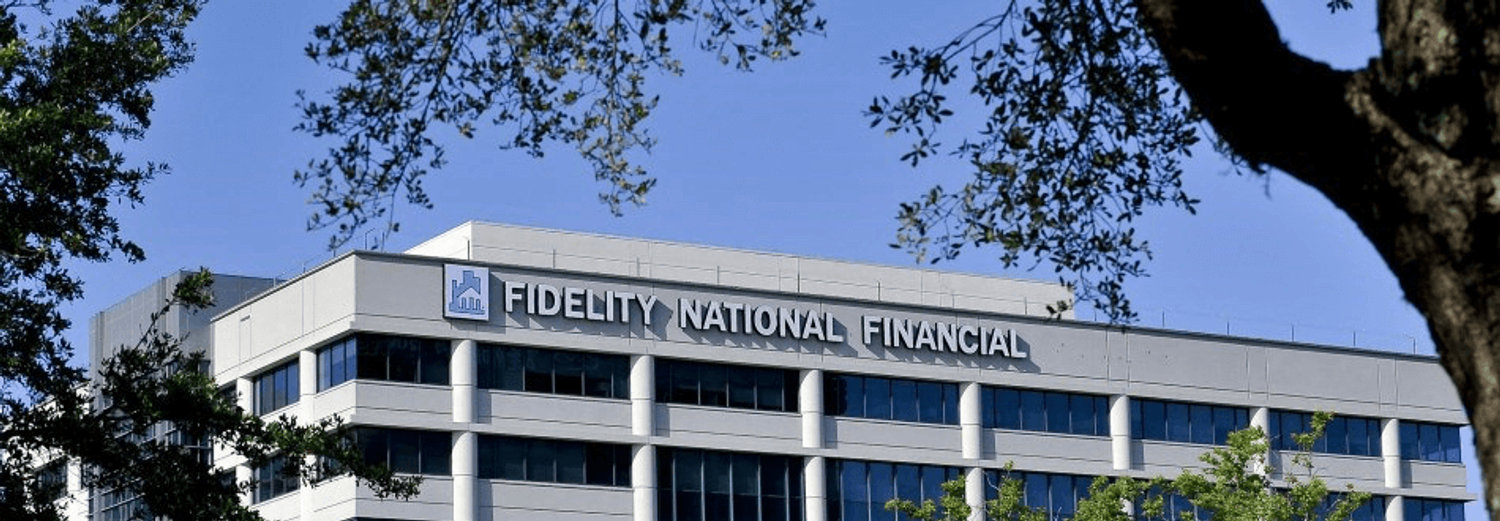

Fidelity National Financial Inc
F:F1EF



Decide at what price you'd be comfortable buying and we'll help you stay ready.
|
F
|
Fidelity National Financial Inc
F:F1EF
|
US |
|
A
|
Attock Cement Pakistan Ltd
KAR:ACPL
|
PK |

|
Anicom Holdings Inc
TSE:8715
|
JP |
|
F
|
Federal Agricultural Mortgage Corp
NYSE:AGM.A
|
US |
|
E
|
Emergent BioSolutions Inc
LSE:0IGA
|
US |
Fidelity National Financial Inc
Fidelity National Financial is best known as a title insurance company. When a home is bought or refinanced, it helps check who really owns the property, issues title insurance, and handles closing and escrow work so the deal can finish cleanly. Its main customers are homebuyers, mortgage lenders, real estate agents, builders, and other firms involved in property transactions. The company makes money in two main ways. In its title business, it earns fees and premiums for searching records, underwriting policies, and managing closings. Through its F&G business, it also sells fixed annuities and other retirement insurance products to people and advisers looking for income and principal protection, earning money from premiums and the spread on the assets it invests. What makes Fidelity National Financial different is that it sits in two very different but steady businesses: real estate transaction services and retirement insurance. That gives it exposure to housing activity on one side and the demand for retirement savings products on the other. It is not a bank or a homebuilder; it is a service provider that helps transactions close and helps insurers package retirement income products for individual savers.

Fidelity National Financial is best known as a title insurance company. When a home is bought or refinanced, it helps check who really owns the property, issues title insurance, and handles closing and escrow work so the deal can finish cleanly. Its main customers are homebuyers, mortgage lenders, real estate agents, builders, and other firms involved in property transactions.
The company makes money in two main ways. In its title business, it earns fees and premiums for searching records, underwriting policies, and managing closings. Through its F&G business, it also sells fixed annuities and other retirement insurance products to people and advisers looking for income and principal protection, earning money from premiums and the spread on the assets it invests.
What makes Fidelity National Financial different is that it sits in two very different but steady businesses: real estate transaction services and retirement insurance. That gives it exposure to housing activity on one side and the demand for retirement savings products on the other. It is not a bank or a homebuilder; it is a service provider that helps transactions close and helps insurers package retirement income products for individual savers.
Results: FNF reported first quarter total revenue of $3.2 billion and adjusted net earnings of $249 million, or $0.93 per diluted share, up from $213 million, or $0.78, a year ago.
Title strength: The Title segment delivered adjusted pretax earnings of $268 million, up 27%, with an industry-leading 13.1% margin, up 140 basis points year over year.
Commercial drive: Commercial business remained a standout, with direct commercial revenue of $338 million, up 15%, and management said it has a strong pipeline of deals across multiple asset classes.
AI push: Management said AI is already being deployed across the company and expects it to improve margins over time, with bigger benefits likely to show up in 2027 as tools become more embedded.
F&G debate: Management said F&G’s earnings are broadly in line with expectations, but the market may still be underestimating the impact of alternative investments and the timing of realizations.
Capital returns: FNF returned $222 million to shareholders in the quarter, including $140 million of dividends and $82 million of buybacks, and said it remains active in repurchases.
Outlook: Management said it can stay within its 15% to 20% annual Title margin target even if residential volumes stay near current levels, but sees added upside if mortgage rates ease.
