
Carlsberg A/S
F:CBGB



Decide at what price you'd be comfortable buying and we'll help you stay ready.
|
C
|
Carlsberg A/S
F:CBGB
|
DK |
|
D
|
Dycom Industries Inc
SWB:DYI
|
US |
|
Carlsberg A/S
CSE:CARL A
|
DK |
Carlsberg A/S
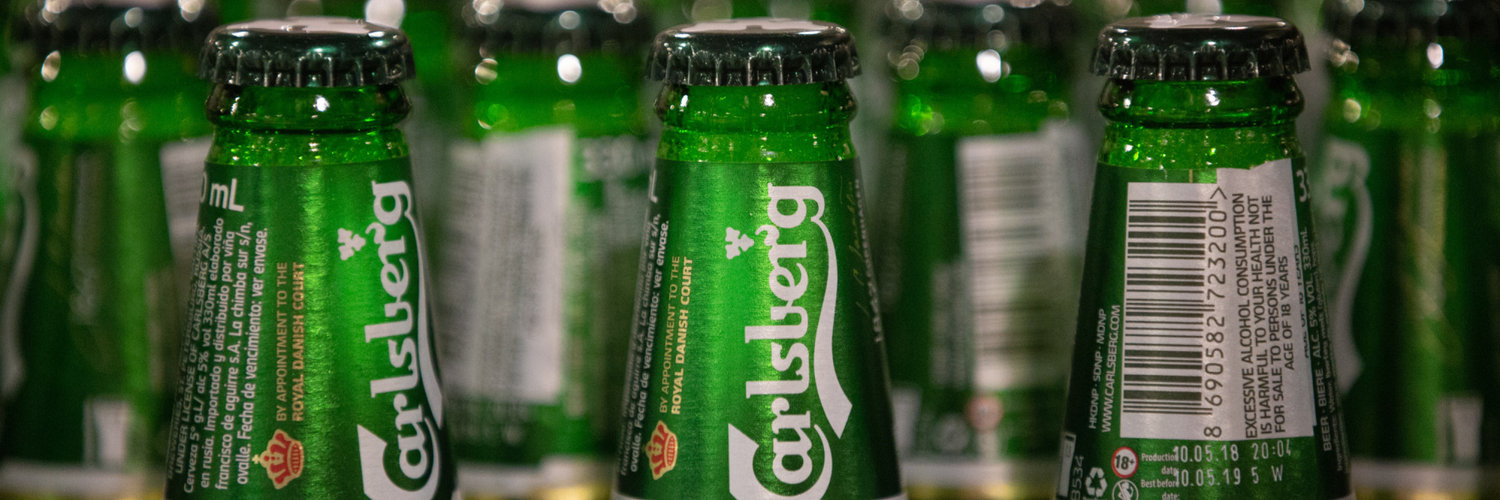
Carlsberg A/S is a global beer and beverage company best known for brewing and selling beer under brands such as Carlsberg, Tuborg, and Kronenbourg. It also makes soft drinks and other non-alcoholic beverages in some markets. The company sells to supermarkets, bars, restaurants, wholesalers, and distributors, which then serve consumers in many countries. Carlsberg makes money mainly by selling packaged beer and draft beer through its own sales and distribution network, plus licensing and brand-related agreements in some markets. Its business depends on moving products through breweries, bottling and canning lines, and local distribution systems, which gives it a strong role in getting drinks from production to retail shelves and taps. Because beer is a branded consumer product, the company’s value comes from brand recognition, local market relationships, and consistent product quality. What makes Carlsberg’s business model distinctive is that it sits between agriculture, manufacturing, and consumer brands. It buys raw materials like barley, hops, and packaging, turns them into finished drinks, and sells them through a broad network of retailers and hospitality customers. In many markets it competes as a mass-market brewer with strong regional brands rather than as a niche craft producer.

Carlsberg A/S is a global beer and beverage company best known for brewing and selling beer under brands such as Carlsberg, Tuborg, and Kronenbourg. It also makes soft drinks and other non-alcoholic beverages in some markets. The company sells to supermarkets, bars, restaurants, wholesalers, and distributors, which then serve consumers in many countries.
Carlsberg makes money mainly by selling packaged beer and draft beer through its own sales and distribution network, plus licensing and brand-related agreements in some markets. Its business depends on moving products through breweries, bottling and canning lines, and local distribution systems, which gives it a strong role in getting drinks from production to retail shelves and taps. Because beer is a branded consumer product, the company’s value comes from brand recognition, local market relationships, and consistent product quality.
What makes Carlsberg’s business model distinctive is that it sits between agriculture, manufacturing, and consumer brands. It buys raw materials like barley, hops, and packaging, turns them into finished drinks, and sells them through a broad network of retailers and hospitality customers. In many markets it competes as a mass-market brewer with strong regional brands rather than as a niche craft producer.
Revenue Growth: Carlsberg delivered strong revenue growth of 11%, mainly driven by higher pricing and premium brand expansion, especially in Asia.
Profit & Margins: Organic operating profit grew by 5.2% despite significant cost pressures, though both gross margin and operating margin declined by 160 basis points.
Upgraded Outlook: Management raised full-year organic operating profit growth guidance to 4–7%, up from the previous -2% to 5%, reflecting strong year-to-date performance.
Shareholder Returns: Initiated a second DKK 1 billion share buyback program and maintained a dividend payout ratio near 50%.
Cost Environment: Input, energy, and salary costs remain high, with COGS per hectoliter up 13%; management expects cost pressure to persist in H2.
Strategic Progress: Continued investment in premiumization, brand marketing, and expansion in Asia; new strategy SAIL'27 off to a solid start.
Russia Update: Unexpected Russian state intervention in Baltika Breweries will lead to deconsolidation and a large non-cash write-down, but no equity impact.
CEO Transition: Cees ’t Hart reflected on achievements and is handing over to Jacob Aarup-Andersen as new CEO from September.
