

Budweiser Brewing Company APAC Ltd
F:4BB



Decide at what price you'd be comfortable buying and we'll help you stay ready.
|
B
|
Budweiser Brewing Company APAC Ltd
F:4BB
|
HK |
|
T
|
Turkcell Iletisim Hizmetleri AS
XBER:TUL1
|
TR |

|
BioLife Solutions Inc
NASDAQ:BLFS
|
US |
|
Z
|
Zillow Group Inc
F:0ZG2
|
US |
|
H
|
Helmerich and Payne Inc
F:HPC
|
US |
Budweiser Brewing Company APAC Ltd
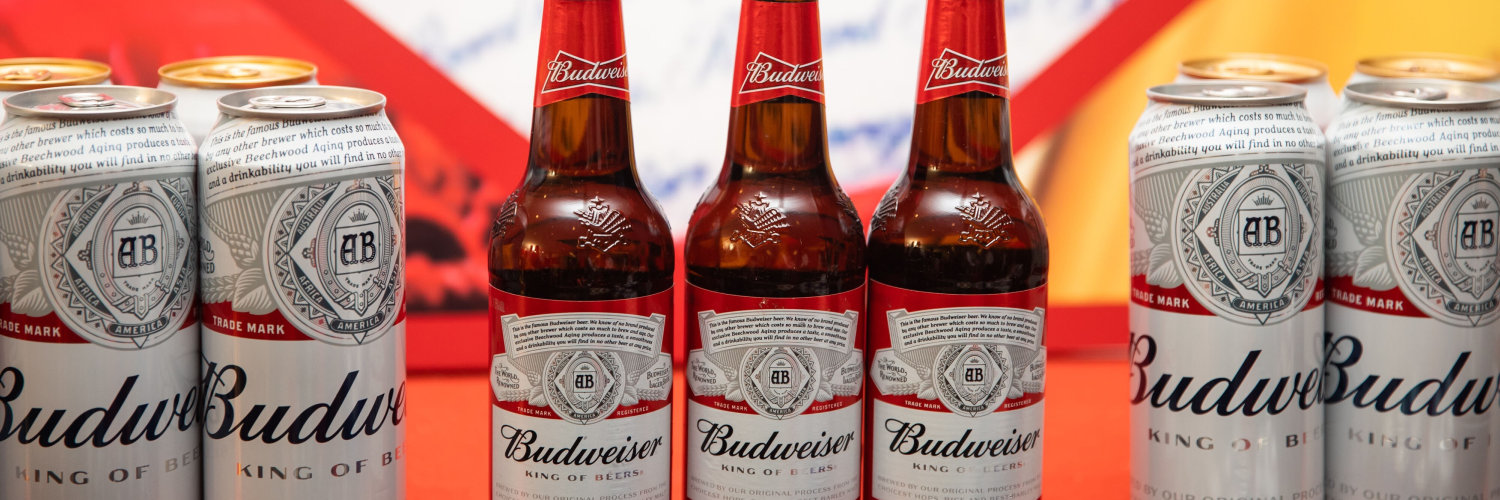
Budweiser Brewing Company APAC Ltd is a beer company that brews, markets, and sells beer across the Asia-Pacific region. Its portfolio includes Budweiser and other mainstream and premium beer brands, sold through grocery stores, convenience stores, bars, restaurants, and other drink channels. The company focuses on branded beer rather than spirits or wine, so its business is built around making and moving packaged beer to consumers through retail and hospitality customers. The company makes money by selling its beer to distributors, retailers, and food-and-drink venues. In practice, it earns most of its revenue when those customers buy cases, bottles, cans, and draft beer for resale to end drinkers. A key part of the model is brand strength: the company relies on well-known labels, marketing, and local brewing and distribution to win shelf space and tap handles. What makes its role different is that it sits between the global beer brand owner and the local markets where people actually buy and drink beer. It has to manage brewing, packaging, regulation, and distribution in each country while tailoring products to local tastes. That makes it a consumer brand business, a manufacturing business, and a route-to-market business all at once.

Budweiser Brewing Company APAC Ltd is a beer company that brews, markets, and sells beer across the Asia-Pacific region. Its portfolio includes Budweiser and other mainstream and premium beer brands, sold through grocery stores, convenience stores, bars, restaurants, and other drink channels. The company focuses on branded beer rather than spirits or wine, so its business is built around making and moving packaged beer to consumers through retail and hospitality customers.
The company makes money by selling its beer to distributors, retailers, and food-and-drink venues. In practice, it earns most of its revenue when those customers buy cases, bottles, cans, and draft beer for resale to end drinkers. A key part of the model is brand strength: the company relies on well-known labels, marketing, and local brewing and distribution to win shelf space and tap handles.
What makes its role different is that it sits between the global beer brand owner and the local markets where people actually buy and drink beer. It has to manage brewing, packaging, regulation, and distribution in each country while tailoring products to local tastes. That makes it a consumer brand business, a manufacturing business, and a route-to-market business all at once.
Volume recovery: Budweiser APAC said total volume returned to growth in Q1 2026, up 0.1%, helped by strong performance in India and a sequential improvement in China.
China still weak, but improving: China volume fell 1.5%, but management said the quarterly decline narrowed again as the company kept investing in in-home distribution, premium brands, and O2O.
Profit under pressure: Revenue fell 0.7% and normalized EBITDA dropped 8.1%, as heavier commercial investment temporarily weighed on margins.
India stands out: India delivered strong double-digit volume and revenue growth, gained share, and remained a key growth engine for the region.
South Korea resilient: Korea stayed soft overall, but the company said it gained share and expects a recovery in the second quarter.
Capital allocation unchanged: New CFO Bernardo Novick said the company will prioritize growth, execution, and value creation, while keeping the same capital allocation approach that includes dividends.
