

OrganiGram Holdings Inc
F:0OG



Decide at what price you'd be comfortable buying and we'll help you stay ready.
|
O
|
OrganiGram Holdings Inc
F:0OG
|
CA |
|
R
|
Roper Technologies Inc
LSE:0KXM
|
US |
|
W
|
Westports Holdings Bhd
KLSE:WPRTS
|
MY |
|
M
|
McDonald's Corp
XETRA:MDO
|
US |
|
Harvey Norman Holdings Ltd
ASX:HVN
|
AU |

|
Tsingtao Brewery Co Ltd
OTC:TSGTY
|
CN |
|
W
|
Western Alliance Bancorp
XBER:WEA
|
US |
OrganiGram Holdings Inc
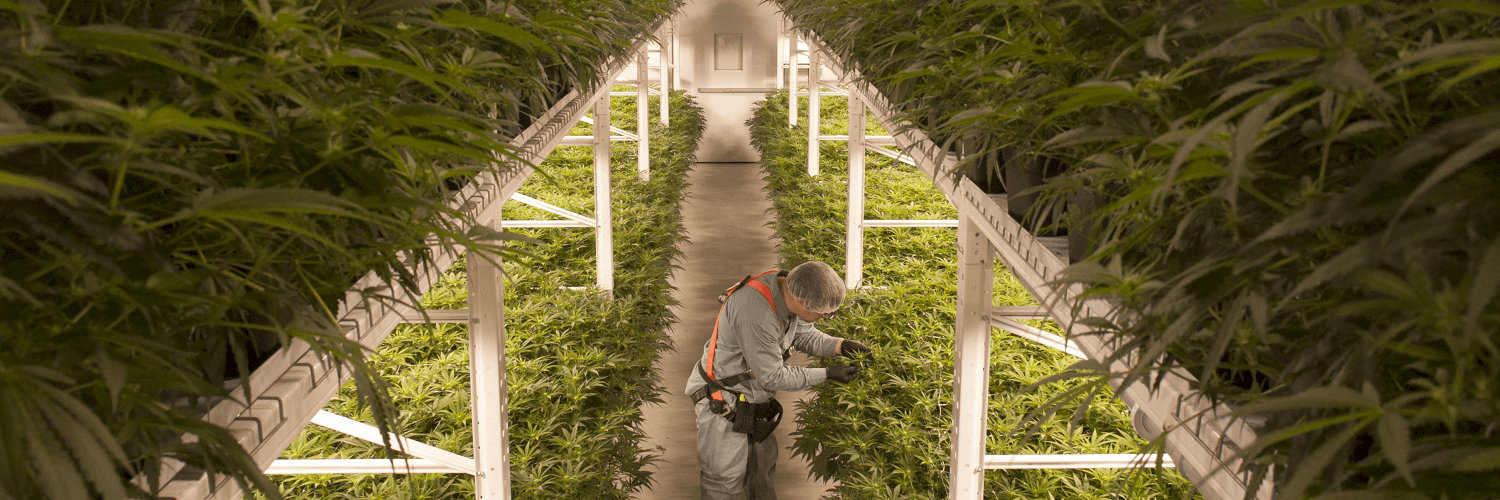
OrganiGram Holdings is a Canadian cannabis company that grows, processes, and sells legal marijuana and hemp-derived products. Its main products include dried flower, pre-rolls, vapes, gummies, and other edibles, which it sells under its own brands and through wholesale channels. The company serves adult-use cannabis customers in Canada and also sells into some international and medical markets where cannabis is legal. The business makes money by selling finished cannabis products to provincial distributors, retailers, and other wholesale buyers, as well as by selling branded products that appear on store shelves. Instead of being a pure retailer, OrganiGram sits closer to the production side of the value chain: it cultivates the plant, turns it into consumer products, and packages it for sale. That gives it more control over quality, product design, and branding than a simple grower selling raw cannabis. What makes the company’s model different is that it mixes agricultural production with consumer packaged goods. Success depends not just on growing cannabis, but on making products that can stand out in a crowded legal market and meet strict rules on safety, labeling, and distribution. In practice, OrganiGram competes as a branded manufacturer in a regulated industry where relationships with distributors and retailers matter as much as cultivation itself.

OrganiGram Holdings is a Canadian cannabis company that grows, processes, and sells legal marijuana and hemp-derived products. Its main products include dried flower, pre-rolls, vapes, gummies, and other edibles, which it sells under its own brands and through wholesale channels. The company serves adult-use cannabis customers in Canada and also sells into some international and medical markets where cannabis is legal.
The business makes money by selling finished cannabis products to provincial distributors, retailers, and other wholesale buyers, as well as by selling branded products that appear on store shelves. Instead of being a pure retailer, OrganiGram sits closer to the production side of the value chain: it cultivates the plant, turns it into consumer products, and packages it for sale. That gives it more control over quality, product design, and branding than a simple grower selling raw cannabis.
What makes the company’s model different is that it mixes agricultural production with consumer packaged goods. Success depends not just on growing cannabis, but on making products that can stand out in a crowded legal market and meet strict rules on safety, labeling, and distribution. In practice, OrganiGram competes as a branded manufacturer in a regulated industry where relationships with distributors and retailers matter as much as cultivation itself.
Quarter pressure: Organigram said Q2 was challenged by execution issues in vapes and infused pre-rolls, plus lower-than-expected international flower volumes, which pushed revenue and margins down year over year.
Revenue and EBITDA: Net revenue was $59.8 million, down about 9% from $65.6 million a year ago, while adjusted EBITDA fell to $0.9 million from $4.9 million.
Guidance raised: Management lifted fiscal 2026 guidance to net revenue above $350 million and said adjusted EBITDA and adjusted gross margin should exceed fiscal 2025 levels, with free cash flow roughly breakeven and capex under $10 million.
Operational fixes: The company said it has identified the causes of the pre-roll, vape, and international quality issues and is already seeing early improvements, with more recovery expected in Q3 and Q4.
Sanity impact: The Sanity Group acquisition is expected to be a major second-half growth driver, with roughly EUR 25 million of average quarterly revenue expected over the next year and integration kept fairly independent at first.
U.S. optionality: Management said U.S. rescheduling is being watched closely, but it is too early to know what path, if any, makes sense for Organigram to enter the U.S. medical market.
